


Phase and Positioning: Where to Place a Subwoofer

In an ideal world, achieving perfect bass would be as simple as connecting your subwoofer to your speakers. However, life is rarely so straightforward, so there are a few more steps before you can sit back and listen - namely, achieving the optimum phase and positioning for your subwoofer.
In this guide, we'll unpack precisely what speaker phasing is and how to ensure your subwoofer remains in phase through our placement tips, achieving bass that blends masterfully with the rest of your audio.
Understanding Subwoofer Phase: What It Means and Why It Matters
Music and audio are made up of energy waves, and your KEF speakers reproduce sound by vibrating in and out in response to these waves. If speakers and subwoofers are in phase relative to each other, this means they’re going in and out at the same time. If they are out of phase, the vibrations of your speaker and subwoofer are out of sync, leading to signals that cancel each other out.
When you first unbox your subwoofer, you’ll notice a switch on the back panel with indicators for 0 and 180. These refer to your subwoofer being in and out of phase with your speaker, with 0 degrees relative phase meaning it is in phase and 180 degrees relative phase meaning that they are out of phase and you won’t be able to hear the bass as it should be.
Positioning a Subwoofer: How Placement Affects Phasing
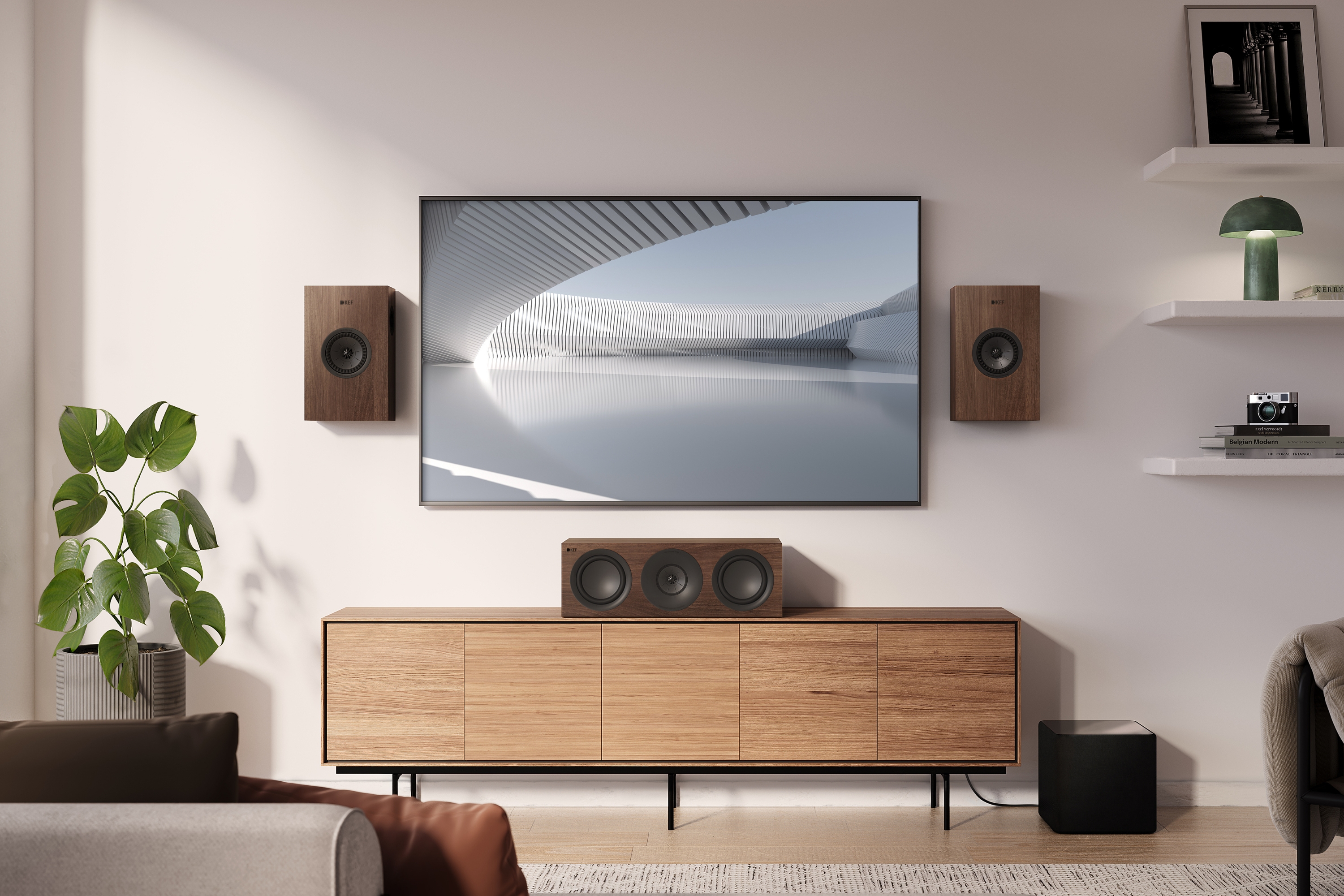
The positioning of your subwoofer dictates the phase shift, with a more significant distance between your subwoofer and the main speaker equating to a larger phase shift. As a rule, if your subwoofer is more than half of its signal’s length away from your speakers, it is out of phase.
For example, a 40Hz signal is 28.13 feet / 8.57m long, so if your subwoofer is 14 feet / 4.27m away from your mains, it will be out of phase, and you will therefore need to set your phase switch to 180 degrees. Similarly, a 100Hz signal is 11.25ft / 3.43m long and is 180 degrees out of phase at a distance of 5.265ft / 1.60 m from your mains.
The angle of your subwoofer can also affect the phase. For example, if your subwoofer is positioned facing your mains, it is automatically pulled out of relative phase and the switch should be set to 180.
Speakers can be out of phase by less than 180 degrees, and a phase controller allows you to account for these smaller increments. However, if you only have a switch, you can experiment with the positioning of your subwoofer in relation to your main speakers to compensate for the phase shifts in between.
How to Test and Adjust Your Subwoofer Phase for Optimal Sound
If you aren’t sure which phase setting sounds best, play a familiar piece of music while a friend flips the switch between settings until you find your sweet spot. Be sure to use the same passage from the same song for the most objective judgement.
How to Place a Subwoofer
Working out where to position a subwoofer is a tricky science, but our tips can help you to select the right spot the first time and get straight to sonic immersion.
One tried and tested technique is to put your subwoofer where your sofa (or wherever your main listening spot) is and move around the room to judge where the bass and audio blend seamlessly. This is where your subwoofer should go.
The size of your subwoofer and speakers also affects the best placement. Smaller subwoofers and speakers should be positioned closer together than larger subs and speakers, as smaller speakers produce fewer low-end sound waves.
Our speaker placement guide includes further tips on proper positioning and spacing for your audio technology.
Using Room Dimensions and Layout to Maximise Subwoofer Performance
The dimensions, layout, and shape of your listening room all affect how your subwoofer will perform, as bass waves can bounce off surfaces and cancel each other out. Usually, ensuring your sub is one third or one fifth of the room away from the wall will help to keep sound even, as a sub too close to a wall or corner can over-boost the bass. If your room layout forces you to place your sub against a wall, avoid corners as much as possible.
Room dimensions and layout can also affect what crossover sounds best. While the standard crossover for movies and audio is 80Hz, we recommend trying higher and lower settings until you find the best level for your space.
Once you’re happy, adjust the volume of your subwoofer to match your preference.
How to Integrate Your Subwoofer with the Rest of Your Audio System
If figuring out the phase and positioning of your subwoofer wasn’t enough, there are a few more steps in aligning your sub and speakers, including bass extension, channel and more. Luckily, our guide to integrating your subwoofer and speakers can help you figure all this out.
For more audiophiliac expertise and tips on creating a phenomenal speaker setup, explore the KEF blog.


