


Bookshelf Speaker Guide: What They Are and How to Set Them Up

Buying your first pair of bookshelf speakers is a big step. It’s the moment you decide that you want to hear more than just the melody. You want to hear the texture, every detail, and the emotion in your music.
For most people, the perfect starting point is the bookshelf speaker. Compact yet packing a powerful punch, they are designed to seamlessly integrate into your home, whether you are spinning vinyl records or transforming blockbuster movies.
If you are ready to make the upgrade, this guide will walk you through exactly what they are, how to choose the right type for your lifestyle, and how to set them up to get the sound you paid for.
For most people, the perfect starting point is the bookshelf speaker. Compact yet packing a powerful punch, they are designed to seamlessly integrate into your home, whether you are spinning vinyl records or transforming blockbuster movies.
If you are ready to make the upgrade, this guide will walk you through exactly what they are, how to choose the right type for your lifestyle, and how to set them up to get the sound you paid for.
What is a Bookshelf Speaker?
In simple terms, bookshelf speakers are compact loudspeakers designed to be placed on a raised surface, such as a stand, desk, or media unit, rather than directly on the floor.
Also known as standmount speakers, they are designed to maximise fidelity in a smaller footprint. They are perfect for small to medium-sized rooms where space is precious. But don't let the size fool you; high-quality models like the Reference 1 Meta or R3 Meta can create a surprisingly vast and detailed soundstage, often disappearing into the room and leaving just the music behind.
Also known as standmount speakers, they are designed to maximise fidelity in a smaller footprint. They are perfect for small to medium-sized rooms where space is precious. But don't let the size fool you; high-quality models like the Reference 1 Meta or R3 Meta can create a surprisingly vast and detailed soundstage, often disappearing into the room and leaving just the music behind.
Active vs. Passive Speakers
Once you have decided on the size, the next decision is the technology. You will need to choose between the traditional HiFi approach or a modern all-in-one solution.
Passive speakers, like our Q Series with MAT™, Q Concerto Meta or LS50 Meta, are the classic choice. These are purely speakers and require you to connect them to a separate external amplifier. This approach is perfect if you view audio as a hobby, as it gives you the freedom to upgrade your amplifier or source components over time, building a system that evolves with your tastes.
On the other hand, active speakers, such as the LS Wireless Collection or Coda W, are designed for simplicity. In these systems, the amplifiers are built directly inside the cabinets and are custom-matched to the drivers. They often feature built-in streaming, Bluetooth, and TV connections, offering a "plug-and-play" solution that removes the need for extra boxes and cables.
Deciding between active vs passive bookshelf speakers depends on whether you prefer the flexibility of components or the convenience of a complete wireless system.
Read our in-depth guide on active vs passive HiFi speakers.
Passive speakers, like our Q Series with MAT™, Q Concerto Meta or LS50 Meta, are the classic choice. These are purely speakers and require you to connect them to a separate external amplifier. This approach is perfect if you view audio as a hobby, as it gives you the freedom to upgrade your amplifier or source components over time, building a system that evolves with your tastes.
On the other hand, active speakers, such as the LS Wireless Collection or Coda W, are designed for simplicity. In these systems, the amplifiers are built directly inside the cabinets and are custom-matched to the drivers. They often feature built-in streaming, Bluetooth, and TV connections, offering a "plug-and-play" solution that removes the need for extra boxes and cables.
Deciding between active vs passive bookshelf speakers depends on whether you prefer the flexibility of components or the convenience of a complete wireless system.
Read our in-depth guide on active vs passive HiFi speakers.
Stands vs. Shelves: Where Should You Put Them?
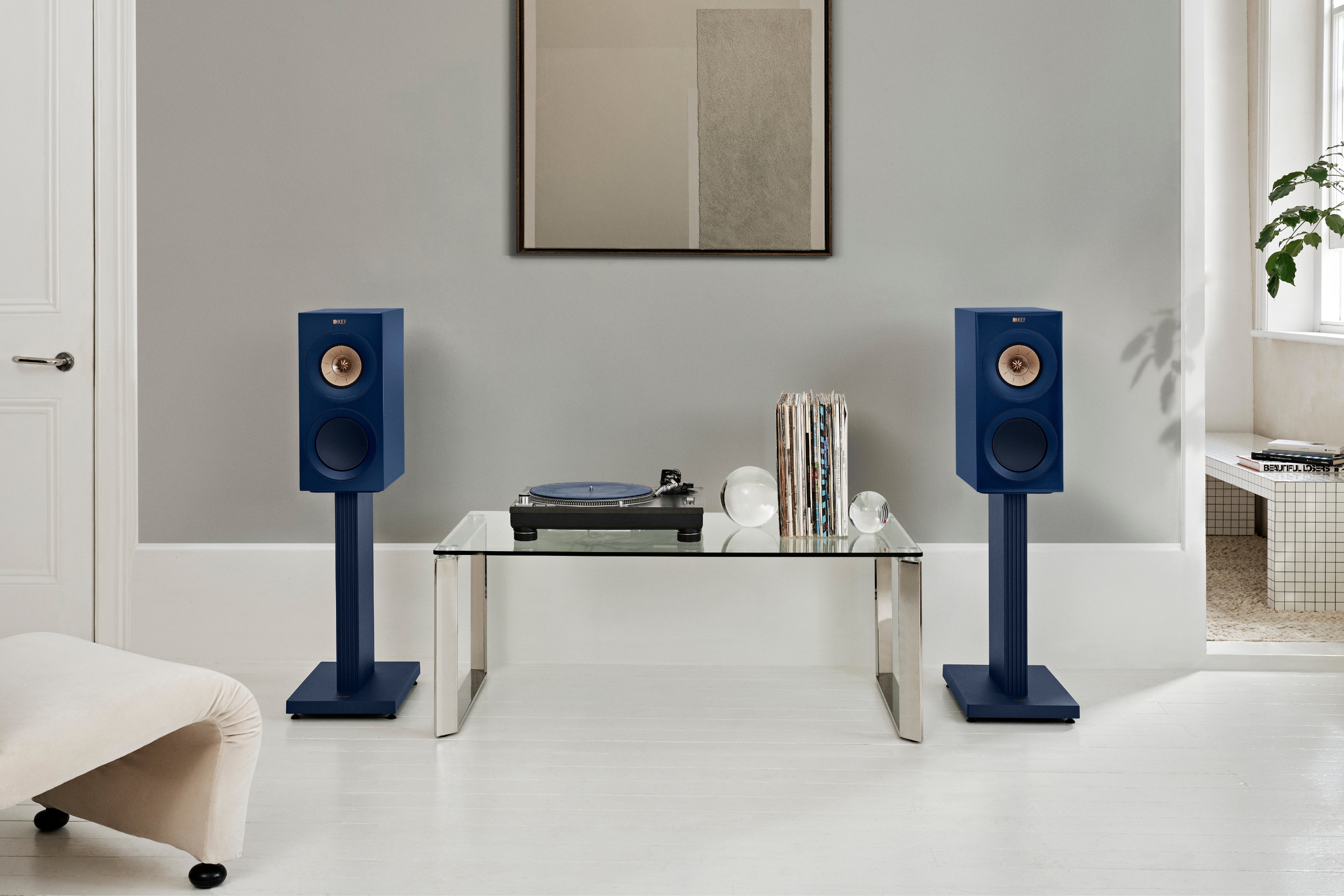
Despite the name, a bookshelf isn't actually the best place for a bookshelf speaker. If you want to get the absolute best performance from your purchase, dedicated speaker stands are arguably the best upgrade you can make. Stands allow you to position the speakers at the correct listening height (ear level) and isolate them from the floor, which prevents vibrations from muddying the bass.
However, we know that stands aren't always practical for every room. If you need to place your speakers on a sideboard, desk, or shelf, there are a few tricks to optimise the sound. Try to pull the speakers forward to the very edge of the surface; this prevents sound waves from reflecting off the furniture in front of the speakers. We also highly recommend using small isolation feet or pads, which help decouple the speaker from the shelf and stop vibrations from rattling your furniture.
However, we know that stands aren't always practical for every room. If you need to place your speakers on a sideboard, desk, or shelf, there are a few tricks to optimise the sound. Try to pull the speakers forward to the very edge of the surface; this prevents sound waves from reflecting off the furniture in front of the speakers. We also highly recommend using small isolation feet or pads, which help decouple the speaker from the shelf and stop vibrations from rattling your furniture.
How to Position Speakers for the Best Sound
Setting up bookshelf speakers correctly makes all the difference between good sound and great sound. The goal is to create a precise stereo image, where the sound feels like a cohesive performance rather than just noise coming from two boxes.
Ideally, you and your two speakers should form an equilateral triangle. For example, if you sit 2.5 metres away from your speakers, the speakers themselves should be 2.5 metres apart.
Rule of thumb: Multiply the speaker distance by approx. 0.866 (sine of 60°) to obtain the optimum listening distance (2.5 m * 0.866 = approx. 2.16 m).
Simpler: Sit in the centre in front of the speakers and move forward until the sound is best. The optimal point is the ‘sweet spot’.
We recommend separating the two bookshelf speakers by at least 1 metre to ensure a good stereo effect. You should also ensure the tweeters, the small drivers that handle the high notes, are roughly at the same height as your ears when you are seated.
Finally, try to give them some breathing room. Pushing speakers right up against a wall or into a corner can make the bass sound "boomy" and distorted. KEF recommends keeping a 30-100cm distance from the rear and the side walls to improve the soundstage. Please check the speaker manuals for more specific information. Angling them slightly inwards towards your chair (toe-in) can also help focus the vocals and detail.
Ideally, you and your two speakers should form an equilateral triangle. For example, if you sit 2.5 metres away from your speakers, the speakers themselves should be 2.5 metres apart.
Rule of thumb: Multiply the speaker distance by approx. 0.866 (sine of 60°) to obtain the optimum listening distance (2.5 m * 0.866 = approx. 2.16 m).
Simpler: Sit in the centre in front of the speakers and move forward until the sound is best. The optimal point is the ‘sweet spot’.
We recommend separating the two bookshelf speakers by at least 1 metre to ensure a good stereo effect. You should also ensure the tweeters, the small drivers that handle the high notes, are roughly at the same height as your ears when you are seated.
Finally, try to give them some breathing room. Pushing speakers right up against a wall or into a corner can make the bass sound "boomy" and distorted. KEF recommends keeping a 30-100cm distance from the rear and the side walls to improve the soundstage. Please check the speaker manuals for more specific information. Angling them slightly inwards towards your chair (toe-in) can also help focus the vocals and detail.
How to Connect Everything Up
How to set up bookshelf speakers depends entirely on the type you chose. If you opted for active speakers like the LSX II, setup is usually seamless. You simply plug them in, download the KEF Connect app to join your Wi-Fi network, and you are ready to stream.
For passive speakers, the process involves a little more hands-on work. You will need to run speaker wire from your amplifier to the terminals on the back of the speakers. It is important to ensure you connect the "Positive" terminal on the amp to the "Positive" terminal on the speaker, and do the same for the "Negative" connection. This ensures the speakers are "in phase" and working together perfectly.
Head to our blog for a range of posts on how to set up your speakers.
For passive speakers, the process involves a little more hands-on work. You will need to run speaker wire from your amplifier to the terminals on the back of the speakers. It is important to ensure you connect the "Positive" terminal on the amp to the "Positive" terminal on the speaker, and do the same for the "Negative" connection. This ensures the speakers are "in phase" and working together perfectly.
Head to our blog for a range of posts on how to set up your speakers.
Matching Speakers to an Amplifier (For Passive Systems)
If you opt for passive speakers, you will need to pair them with the right amplifier. You need an amp that provides enough power to drive the speakers comfortably without straining, so always check the recommended amplifier power in your speaker’s manual. However, it is highly recommended to use a powerful amplifier with more power than strictly needed, rather than a weak one. A weak amplifier will start clipping very early and has a high chance of damaging your speakers; in fact, more speakers are destroyed by underpowered amplifiers than by reasonably overpowered ones.
Using a powerful amplifier with more power than needed is more recommended than a weak amplifier that will start clipping very early and has a good chance of damaging your speakers. Speakers are more often damaged by underpowered amplifiers than by amplifiers that provide a bit more power than necessary.
Different amplifiers have different sonic characteristics that can change the sound produced. Some might sound warm and rich, while others are analytical and bright. For the best result, nothing beats hearing the combination for yourself.
Find a retailer near you to try out amplifiers and get expert advice.
Using a powerful amplifier with more power than needed is more recommended than a weak amplifier that will start clipping very early and has a good chance of damaging your speakers. Speakers are more often damaged by underpowered amplifiers than by amplifiers that provide a bit more power than necessary.
Different amplifiers have different sonic characteristics that can change the sound produced. Some might sound warm and rich, while others are analytical and bright. For the best result, nothing beats hearing the combination for yourself.
Find a retailer near you to try out amplifiers and get expert advice.
Why KEF Bookshelf Speakers Are a Great Choice
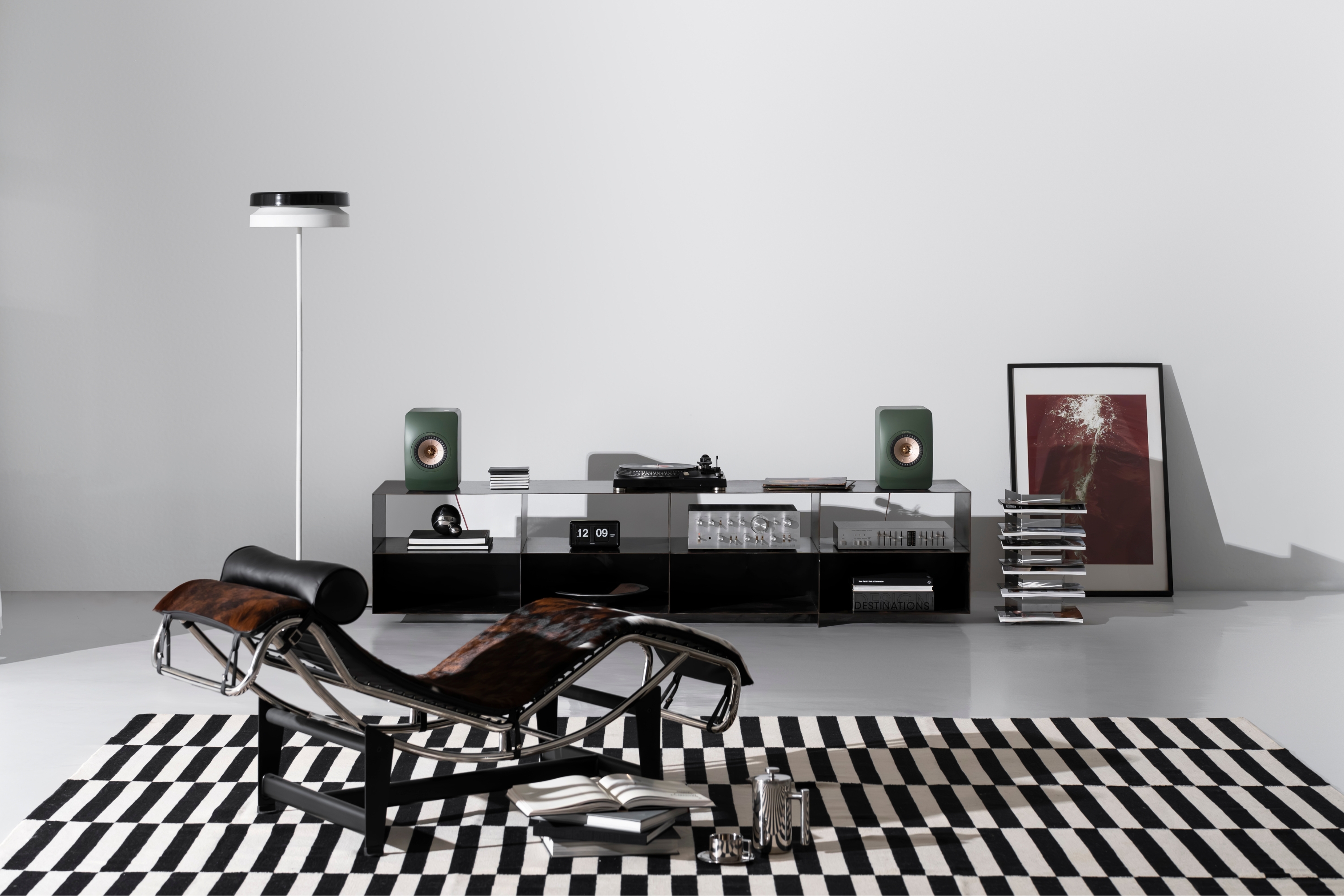
At KEF, high-fidelity sound should be consistent, no matter where you sit in the room. That is why our bookshelf speakers feature our signature Uni-Q technology, in which the tweeter is placed at the exact acoustic centre of the bass/midrange cone. This creates a single point source, meaning the sound disperses evenly throughout the room, so everyone gets the same natural sound.
We have also introduced Metamaterial Absorption Technology (MAT™) across models like the LS50 Meta, Q Series and R Series. This revolutionary tool absorbs 99% of unwanted rear sound from the driver, eliminating distortion and delivering purer, more natural performance. Whether you choose the accessible Q Series or the legendary LS50 Meta, you are investing in decades of acoustic innovation designed to bring the studio experience home.
Explore the KEF Bookshelf Speaker Collection.
We have also introduced Metamaterial Absorption Technology (MAT™) across models like the LS50 Meta, Q Series and R Series. This revolutionary tool absorbs 99% of unwanted rear sound from the driver, eliminating distortion and delivering purer, more natural performance. Whether you choose the accessible Q Series or the legendary LS50 Meta, you are investing in decades of acoustic innovation designed to bring the studio experience home.
Explore the KEF Bookshelf Speaker Collection.


